Tag: taxes
-

What Is IRS Notice CP59 and How an Enrolled Agent Can Help
When a taxpayer receives IRS Notice CP59, it means the IRS believes they did not file a required tax return. This notice is sent when the IRS has no record of a return being filed for a specific year, even though they have information that suggests one was required. While the notice itself does not…
-

Understanding IRS Notice CP3219 or LTR 3219 and How an Enrolled Agent Can Help
IRS Notice CP3219 or LTR 3219 is a crucial communication indicating that the IRS proposes changes to a tax return and seeks to assess additional tax. Taxpayers have 90 days, or 150 days if abroad, to respond before the IRS initiates tax collection. This notice allows for disputing changes, filing a petition with the U.S.…
-

How an Enrolled Agent Can Help Resolve IRS Notice CP2566
IRS Notice CP2566 indicates a missing tax return, prompting a proposed tax assessment based on available income data. It signals ignored prior requests and necessitates urgent action. Taxpayers can resolve it by filing the return, disputing the assessment, or seeking help from an Enrolled Agent like Steve Perry to ensure compliance and reduce liabilities.
-
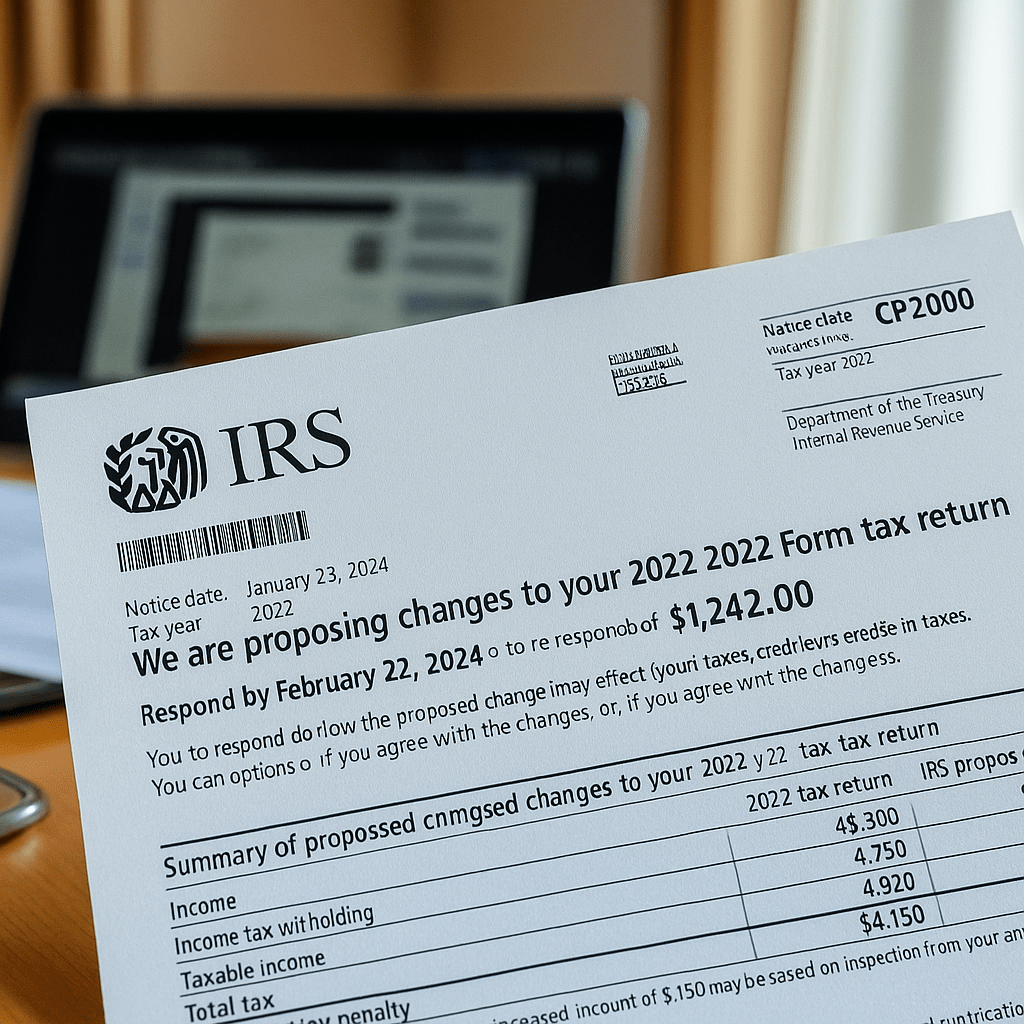
Understanding IRS Notice CP2000: What It Means and How an Enrolled Agent Can Help
The IRS Notice CP2000, generated by the Automated Under Reporter program, indicates discrepancies between reported income and third-party data. It includes proposed tax adjustments and requires a response. Taxpayers can agree, disagree, or partially agree with changes using an Enrolled Agent for assistance. Prompt, accurate responses are crucial.
-

Understanding IRS Notice CP14: What It Means and How an Enrolled Agent Can Help
No one likes to receive mail from the IRS, especially when it says money is owed. One of the most common notices issued by the IRS is Notice CP14, which informs taxpayers that they have a balance due on their federal income taxes. While the notice can feel alarming, it is not the end of…
-

Understanding IRS Letter 566: Your Audit Notice Explained
IRS Letter 566 notifies taxpayers that their tax return is under audit, requiring specific documentation for review. While it doesn’t indicate wrongdoing, timely responses are crucial. Engaging an Enrolled Agent ensures proper guidance and protection of taxpayer rights throughout the audit process, helping resolve issues efficiently.
-

Understanding IRS Form 12153: Request for a Collection Due Process or Equivalent Hearing
Taxpayers who receive notices from the IRS regarding enforced collection actions such as liens or levies may feel overwhelmed and unsure of how to respond. Fortunately, the IRS provides a formal avenue for individuals to challenge or appeal these actions through IRS Form 12153, Request for a Collection Due Process or Equivalent Hearing. Understanding the…
-

Responding to IRS Letter 11: Why Prompt Action and Professional Help Matter
IRS Letter 11 is a significant notice signaling a taxpayer’s account is under serious collection threat, allowing a limited chance to challenge levies. Taxpayers have 30 days to request a Collection Due Process hearing using Form 12153, with an option for an equivalent hearing later. Engaging an Enrolled Agent can aid timely responses and negotiations…
-
Understanding IRS Notice CP49: What It Means and How an Enrolled Agent Can Help
Receiving a tax refund is usually a welcome event, but sometimes the IRS applies that refund to a prior balance owed rather than issuing a check or direct deposit. When this happens, the taxpayer may receive IRS Notice CP49, which can come as a surprise if the prior balance was unknown or forgotten. Understanding the…
-

How to Respond to IRS Letter 12C Efficiently
When taxpayers file their federal income tax return, they expect either a refund or confirmation that their tax responsibilities have been met. However, sometimes the IRS responds with a notice instead, specifically, IRS Letter 12C. This letter often causes confusion and concern but understanding its purpose and how to properly address it—with the help of…
 Tax Delete USA