Tag: irs
-

IRS Notice CP508C: What It Means and How Steve Perry, EA can Help
IRS Notice CP508C means your tax debt has been certified as seriously delinquent and reported to the State Department, placing your passport at risk. This can affect international travel, employment, and licensing. Steve Perry, EA at Books Taxes & More helps taxpayers resolve these issues quickly through installment agreements, Offers in Compromise, or financial hardship…
-
Why Every S-Corporation Owner Needs a Reasonable Compensation Basis
S-corporation owners are required to pay themselves a reasonable salary for the work they perform. The IRS scrutinizes these salaries, and failure to properly document reasonable compensation can trigger audits and penalties. Many business owners struggle to determine what is considered reasonable. Steve Perry, EA at Books Taxes & More creates comprehensive, audit-proof reasonable compensation…
-

What Taxpayers Should Know About the IRS CP71 Notice and How an Enrolled Agent Can Help
– The IRS CP71 Notice, titled “Annual Reminder of Balance Due,” alerts taxpayers annually about unpaid taxes including penalties and interest, without immediate collection action but with potential future enforcement. – Ignoring the CP71 can lead to escalated IRS collection actions such as liens or levies. – Steve Perry, an Enrolled Agent (EA) at Books,…
-

Understanding IRS CP40:What it means and How an Enrolled Agent Can Help
– The IRS CP40 Notice indicates a taxpayer’s unpaid tax debt has been assigned to a private debt collection agency authorized by the IRS to handle lower-priority cases before the collection statute expires. – Private agencies cannot use IRS tools like liens, levies, or garnishments, and the notice means the IRS prioritizes other cases. -…
-

How an Enrolled Agent Can Help with Your CP22A Notice
Receiving a notice from the IRS can be unsettling, especially when it involves changes to an already filed tax return. One such notice is the IRS CP22A, a document that informs the taxpayer that their return has been adjusted, typically based on information provided by the taxpayer or a recent amendment. This notice is not…
-

How an Enrolled Agent Can Help Resolve IRS Notice CP2566
IRS Notice CP2566 indicates a missing tax return, prompting a proposed tax assessment based on available income data. It signals ignored prior requests and necessitates urgent action. Taxpayers can resolve it by filing the return, disputing the assessment, or seeking help from an Enrolled Agent like Steve Perry to ensure compliance and reduce liabilities.
-
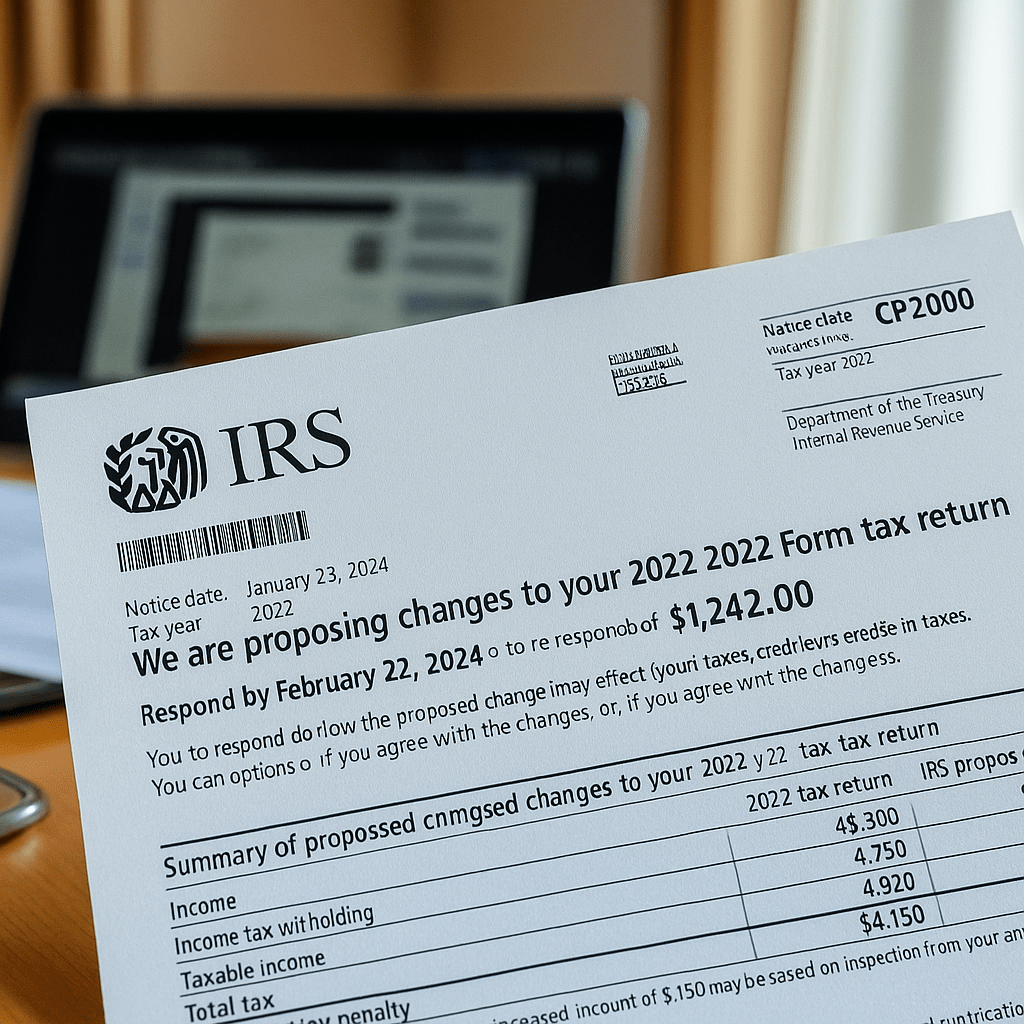
Understanding IRS Notice CP2000: What It Means and How an Enrolled Agent Can Help
The IRS Notice CP2000, generated by the Automated Under Reporter program, indicates discrepancies between reported income and third-party data. It includes proposed tax adjustments and requires a response. Taxpayers can agree, disagree, or partially agree with changes using an Enrolled Agent for assistance. Prompt, accurate responses are crucial.
-

Understanding IRS Notice CP14: What It Means and How an Enrolled Agent Can Help
No one likes to receive mail from the IRS, especially when it says money is owed. One of the most common notices issued by the IRS is Notice CP14, which informs taxpayers that they have a balance due on their federal income taxes. While the notice can feel alarming, it is not the end of…
-

Understanding IRS Letter 566: Your Audit Notice Explained
IRS Letter 566 notifies taxpayers that their tax return is under audit, requiring specific documentation for review. While it doesn’t indicate wrongdoing, timely responses are crucial. Engaging an Enrolled Agent ensures proper guidance and protection of taxpayer rights throughout the audit process, helping resolve issues efficiently.
-

Understanding IRS Form 12153: Request for a Collection Due Process or Equivalent Hearing
Taxpayers who receive notices from the IRS regarding enforced collection actions such as liens or levies may feel overwhelmed and unsure of how to respond. Fortunately, the IRS provides a formal avenue for individuals to challenge or appeal these actions through IRS Form 12153, Request for a Collection Due Process or Equivalent Hearing. Understanding the…
 Tax Delete USA